
Transcript
Announcer:
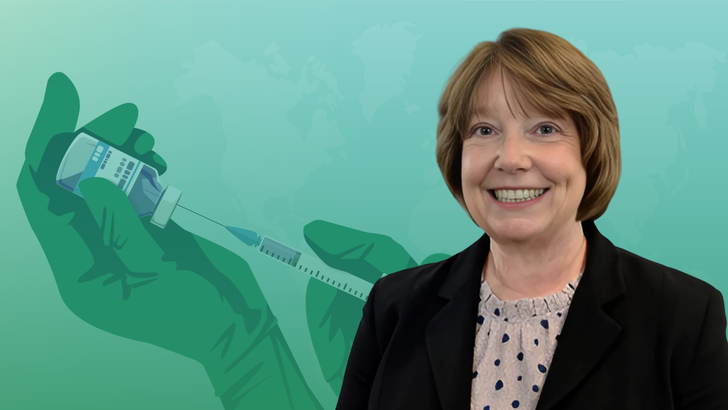
You’re listening to VacciNation on ReachMD. On this episode, Dr. Ruth Carrico will share strategies for counseling young patients and their families about the importance of vaccinations. Dr. Carrico is a family nurse practitioner based in Louisville, Kentucky, an Adjunct Professor in the Division of Infectious Diseases at the University of Louisville School of Medicine, and a Senior Partner and Co-Owner of Carrico and Ramirez, a clinical practice and consulting company. Let’s hear from her now.
Dr. Carrico:
All of us realize the unfortunate impact of social media. We have individuals that will be providing information that is completely incorrect—that misinformation, information that is wrong. We also have disinformation, and that may be somebody who takes a little kernel of truth, but they shape it based upon their own information that may be wrong or maybe their own biases. This really underscores the importance of healthcare providers being critical and credible sources of information. That means that we need to start our conversations at a very different point. You know, I think about my own practice, and I kind of have two time periods. One is the way I handled things before COVID. So that’s my BC time period, my before COVID. Now that I’m in the AC, or that after COVID time period, I’m realizing that in the past, my patients listened to what I was saying. Nine times out of 10, they would take my advice; they would go ahead and do what needed to be done. Now, my patients want more control over their healthcare, and that means I need to spend more time talking with them about not only their health condition, but the interventions that I think are important.
In terms of my own development as a healthcare provider, what is it that I need to do to be a better nurse practitioner? Part of that is I need to be doing a lot of self-reflection on how I communicate with my patients. Am I doing the best job with them? Am I starting the conversation in the best place? And am I going to the patient and meeting them at an ideal location? I don’t mean geographically. I mean am I going to where they are in terms of understanding, importance, and value systems so that I’m giving them the best information? Then secondly, am I thinking about how they are going to use that information? I may be talking about vaccines all day long, but if they don’t have access, if they don’t have a healthcare provider that is open at the times when they can go—mom, dad, or others have a job—can they not go during routine business hours? What about health insurance access? What about costs? Am I really trying to understand the realities of care of my patient? And then trying to figure out what are the resources they need? Now, I may not be able to provide all of those, but as a healthcare provider, am I trying to understand what my patient needs? And then am I doing what needs to be done to help connect them to the resources that may be important for them?
You know, some of my colleagues are saying, “Oh my gosh, I’m so tired of listening to the reasons why my patient doesn’t want to be vaccinated.” I know all of us have that fatigue, but I would challenge each of my colleagues to say, “Really what we need to be doing is maybe rejoicing that our patients feel comfortable enough to bring these questions and their concerns to us.” Maybe they were always there, but they just didn’t talk about it. Now, they’re more willing to talk about it, so I need to make sure that they are comfortable in bringing these to my attention. And that in turn, I am thinking about new ways of having these discussions; I need to be more willing to accept that my patients have questions or that maybe they’re not ready for a vaccine at this particular time. But I always let them know that when you’re here in the practice with me, you’re the most important person in my life, and we’re going to spend time to talk about what you need and what is important to you. And you may differ from what I recommend, and if so, the next time I see you, we’re going to talk about this again because I care about you. I want to have the opportunities to have these discussions, and I want you to have access to the best healthcare that is capable of preventing disease to the best of our ability in your children, your families, and others.
Announcer:
That was Dr. Ruth Carrico talking about how building trust and personalizing our approach can make counseling around vaccinations more effective. To access this and other episodes in our series, visit VacciNation on ReachMD.com, where you can Be Part of the Knowledge. Thanks for listening!
